



Mega Moolah Strategy: Statistical Framework and Bankroll Discipline for Australian Players
Creator:
Games Global
Type:
Slot
Variance:
Moderate
Theoretical RTP:
88.12%
Min Bet:
0,25
Largest Bet:
0.65
Hands-Free Spin:
No
Release Date:
28.11.2006
The mathematical reality of Mega Moolah strategy is clinical: no skill component exists, no betting system improves jackpot probability, and no historical pattern predicts the next wheel trigger. The slot operates as a sequence of statistically independent random number generator events. What follows, therefore, is not a winning strategy — none exists — but a discipline framework: how Australian players can engage the title without exceeding budgetary tolerance and how to optimise bet sizing within mathematical constraints. This guide assumes Australian players above the age of 18, with discretionary entertainment budgets, who accept that the Mega tier probability per spin sits in the order of one in fifty million.
In This Article
The RNG Architecture and Why Strategy Cannot Affect Outcomes
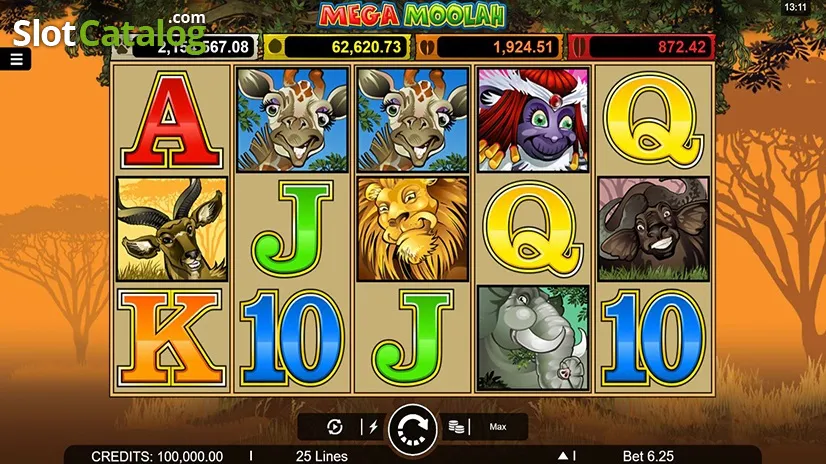
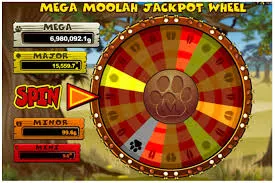
Mega Moolah operates on a certified random number generator audited by eCOGRA. Each spin is statistically independent — the outcome of any prior spin has zero predictive value for any subsequent spin. The wheel-trigger event probability, estimated at approximately 1 in 8,000 to 12,000 across the network, remains constant regardless of recent activity at the table.
The most common cognitive error in Mega Moolah engagement is the gambler's fallacy: the assumption that an "overdue" jackpot has elevated probability. This is mathematically false. A Mega tier that has not resolved for fifty days carries identical probability on the next spin as one that resolved an hour ago. The RNG holds no memory of prior outcomes.
Streaks — both winning and losing — occur at frequencies entirely consistent with random distribution. A 50-spin dry run is not anomalous; a 200-spin dry run is uncommon but within statistical norms; a 500-spin dry run is rare but not impossible. Players should plan budgets around expected variance, not expected returns.
Pre-Session Configuration: The Six-Step Setup Protocol
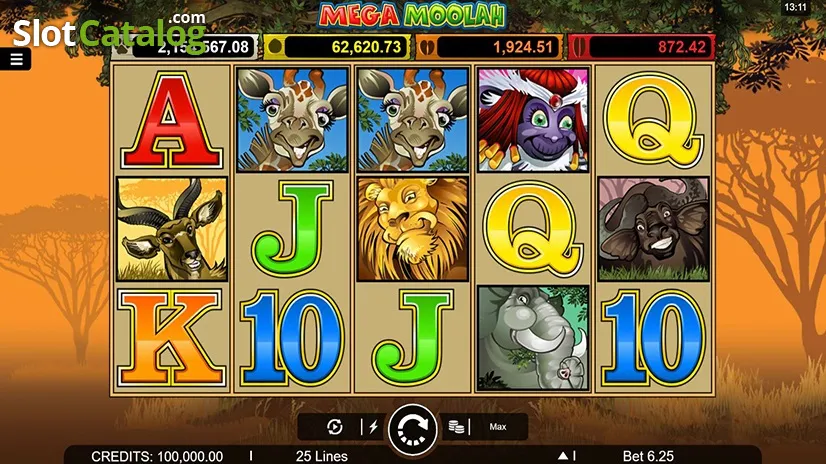
Disciplined Mega Moolah engagement requires explicit pre-session configuration. The following six-step protocol should be completed before initial deposit at any operator.
- Operator selection — Verify MGA, Curaçao or Kahnawake licensing; confirm Mega Moolah is present in the lobby; confirm AUD wallet support and PayID availability. Allotted time: 2 minutes.
- Account registration — Email, +61 mobile verification and Australian postcode. Allotted time: 3 minutes.
- Responsible gambling configuration — Configure deposit limit, session timer and reality-check intervals before depositing. Most operators do not allow downward adjustment mid-session, which is the intended structural protection. Allotted time: 2 minutes.
- Initial deposit via PayID — Recommended primary deposit channel for AU players. Settlement within 60 seconds via NPP. Allotted time: 1 minute.
- Demo mode familiarisation — Execute 50–100 demo spins to confirm UI familiarity, free spins trigger behaviour and wheel animation rendering. No real-money risk. Allotted time: 10 minutes.
- Initial real-money spin at minimum stake — Begin at AU$0.25 to confirm jackpot eligibility while preserving bankroll for extended exposure. Allotted time: 1 minute.
Total elapsed time: approximately 19 minutes. The investment is non-trivial and structurally important — operators that simplify or eliminate any of these steps should be regarded with caution.
Optimal Bet Sizing for Maximum Jackpot Exposure
The counterintuitive but mathematically correct optimal bet for jackpot pursuit is the minimum stake — typically AU$0.25 at most operators. The reasoning:
The wheel-trigger probability is statistically independent of bet size. A AU$0.25 spin and a AU$6.25 spin carry identical Mega tier eligibility. This was empirically demonstrated by Jon Heywood's October 2015 Guinness World Record win of £13,213,838.68 from a £0.25 stake at Betway.
Higher stakes deliver multiplied base-game payouts (line wins, free-spin payouts, lion-wild multipliers) but provide no incremental wheel-trigger probability. Therefore, for a fixed bankroll, the strategy that maximises Mega tier exposure is to minimise bet size and maximise spin count. A AU$200 bankroll executed at AU$0.25 yields 800 spins; the same bankroll executed at AU$6.25 yields 32 spins. The 25-fold difference in wheel-trigger exposures favours the minimum-stake approach by a wide margin.
Players seeking a hybrid optimisation — partial jackpot exposure with elevated base-game returns — may employ mid-range bets (AU$0.75 to AU$1.50). The trade-off remains mathematical: every step above minimum reduces total spin count and thus total wheel-trigger exposure.
Bankroll Mathematics for Jackpot Pursuit
The 88.12% RTP figure translates to an 11.88% expected loss rate over long-term play. Application to typical session parameters yields the following expectations:
| Bet Size | Spins per Hour | Hourly Wager | Hourly Expected Loss |
| AU$0.25 | 600 | AU$150 | AU$17.82 |
| AU$1.00 | 600 | AU$600 | AU$71.28 |
| AU$3.00 | 600 | AU$1,800 | AU$213.84 |
| AU$6.25 | 600 | AU$3,750 | AU$445.50 |
Three player profiles, each with characteristic budget allocation and corresponding Mega tier statistical exposure:
- Casual profile (AU$50/month): Approximately 3 hours of play at minimum stake. Statistical Mega tier probability across one year of activity: approximately 0.0001%.
- Regular profile (AU$200/month): Approximately 12 hours of play at minimum stake. Annual Mega probability: approximately 0.0004%.
- Heavy profile (AU$1,000/month): Approximately 60 hours of play at minimum stake. Annual Mega probability: approximately 0.002%.
Even at AU$10,000 annual budget allocation, statistical Mega tier exposure remains below 0.05%. The rational conclusion: jackpot pursuit budgets must be conceptualised as entertainment expense, not investment. Players unable to absorb the budget loss without lifestyle impact should not engage at the corresponding budget level.
Free Spins Bonus Structure and Optimisation Considerations
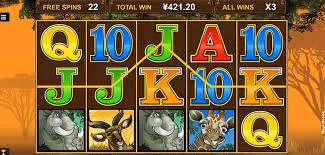
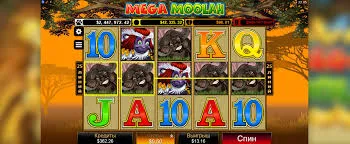
The free spins bonus triggers on three or more monkey scatter symbols anywhere on the reels. Trigger awards 15 free spins with a 3× multiplier applied to all wins. Retrigger occurs on three or more scatters during the bonus, with no upper cap on retrigger frequency.
Lion symbols (wilds) substitute for all paying symbols during free spins and carry a 2× multiplier. When combined with the 3× bonus multiplier, lion-wild substitutions produce effective 6× multipliers on completed lines. The theoretical maximum non-jackpot win — five lions across an enabled payline during a multi-retrigger free spins sequence — reaches 225,000× the line bet.
Optimisation note: free spins frequency cannot be influenced by bet sizing or play pattern. The trigger probability is constant per spin and independent of prior bonus events. Free spins represent value at any bet level proportional to current stake; no strategy increases bonus trigger frequency.
Walk-Away Criteria: The Active Strategy Component
The single component of Mega Moolah engagement that admits genuine player agency is session termination. Five rules constitute the discipline framework:
| Rule | Trigger Condition | Action |
| Loss Limit | −50% of session bankroll | Immediate session termination, no exception |
| Win Limit | +100% of session bankroll | Withdraw 50%; continue with retained 50% only |
| Time Limit | 60 minutes elapsed session time | Mandatory break, regardless of outcome |
| Cool-Off | Loss limit triggered | 24-hour deposit cooldown applied |
| Tier Hit Cash-Out | Mini or Minor tier resolution | Cash out the resolution; do not chase Major/Mega with retained funds |
The win-limit protocol converts statistical variance into guaranteed positive expected value: by withdrawing 50% at +100% session performance, the player locks in original bankroll plus 50% return regardless of subsequent outcome. This is the only structural mechanism by which a player can extract guaranteed value from an otherwise negative-expectation game.
Player Profile Suitability Assessment
Self-assessment criteria for Mega Moolah engagement appropriateness:
Suitable engagement profile indicators:
- Entertainment-budget mindset with absorbable potential losses
- Long-shot risk tolerance and acceptance of negative-expectation outcomes
- Pokie engagement under 2 hours per week as recreational activity
- Pre-existing acceptance of Mini and Minor tier wins as positive outcomes
- Configured responsible-gambling controls before initial deposit
Unsuitable engagement profile indicators:
- Expectation of frequent or sustained base-game payouts
- Loss-chasing behavioural patterns
- Inability or unwillingness to set explicit budget thresholds prior to play
- Engagement framed as supplemental income generation
- Pre-existing problem-gambling indicators or family history
Players in the latter category should consider lower-volatility alternatives. Absolootly Mad Mega Moolah delivers the same four-tier mechanic with 96.49% base RTP. Book of Dead and Big Bass Bonanza offer high-frequency moderate-variance experiences. Starburst delivers low-volatility steady returns.
Australian Responsible Gambling Resources and Support
Mega Moolah's high-volatility classification places it in an elevated risk category for problem-gambling exposure. Players exhibiting any of the unsuitable-profile indicators above — or who develop concerns during sustained engagement — should access the following Australian-specific support frameworks without delay.
- BetStop — the Australian National Self-Exclusion Register operating at betstop.gov.au. Mobile registration completes in approximately four minutes and applies across all Australian-licensed online wagering services. The exclusion period is selectable from three months to lifetime; it cannot be reversed during the elected period, which is the intended structural protection.
- Gambling Help Online — confidential 24-hour counselling on 1800 858 858. The service is free, government-funded, and accessible to anyone affected by gambling — including family members and partners. Callers are not identified to any operator or regulator.
- State-level regulators — Liquor & Gaming NSW, the Victorian Gambling and Casino Control Commission, the Queensland Racing Integrity Commission and the Northern Territory Racing Commission provide jurisdiction-specific complaint and enforcement pathways.
- Lifeline Australia — 13 11 14 for general crisis support where gambling concerns intersect with broader mental-health distress.
Pre-set deposit and session limits configured at the operator level cannot be increased mid-session at most regulated casinos. This structural design is intended to prevent escalation under loss-chasing pressure. Australian players are strongly advised to configure these controls before initial deposit, not after the first significant loss. The structural integrity of the discipline framework rests on this temporal sequencing — limits set proactively are protective; limits set reactively after a losing run are typically circumvented.
Frequently Asked Questions
Does any betting strategy improve Mega Moolah outcomes?
No. The slot operates on a certified RNG with statistically independent spins. No bet pattern, betting system, time-of-day adjustment, casino selection or play volume modification can influence wheel-trigger probability. Strategy in this context refers exclusively to bankroll discipline and session termination protocols.
What is the optimal bet size for jackpot pursuit?
The minimum stake (typically AU$0.25). All bet levels carry identical wheel-trigger probability; minimum stake maximises spin count per bankroll, thus maximising aggregate wheel-trigger exposure. This is empirically validated by Jon Heywood's £0.25-stake Guinness World Record win.
What budget should be allocated to a serious Mega Moolah pursuit?
Allocation should reflect entertainment expenditure tolerance, not investment expectation. At minimum stake of AU$0.25, hourly expected loss is approximately AU$17.82. Players should reverse-engineer budget from their loss-tolerance threshold rather than from anticipated jackpot returns.
Can odds be improved through any mechanism?
No. Wheel-trigger probability is fixed per spin and statistically independent of prior outcomes, bet size, time of day, casino selection, account history or any other player-controlled variable. The only mechanism through which a player exerts influence is total spin count — a function of bankroll size and bet size.
When should a session be terminated?
Three triggers warrant immediate termination: loss limit (−50% session bankroll), time limit (60 minutes elapsed), or tier resolution where partial cash-out applies. Win limit (+100%) triggers a partial cash-out rather than termination. Rule application is non-negotiable.
Is Mega Moolah appropriate for new pokie players?
Generally not. Mega Moolah's 88.12% base RTP and high-volatility profile are unsuitable for players seeking sustained base-game wins or learning fundamental pokie mechanics. New players are advised to engage with lower-volatility titles (Starburst, Book of Dead, Big Bass Bonanza) before considering Mega Moolah.
The structural conclusion of this analysis: Mega Moolah is a high-volatility long-shot pokie with no skill component. The disciplined player engagement framework consists of pre-set responsible-gambling controls, minimum-stake bet sizing for jackpot pursuit, and rigorous walk-away criteria. The wheel will resolve when it resolves; the player's only agency is in the management of exposure to the resolution.